BIOGRAPHY
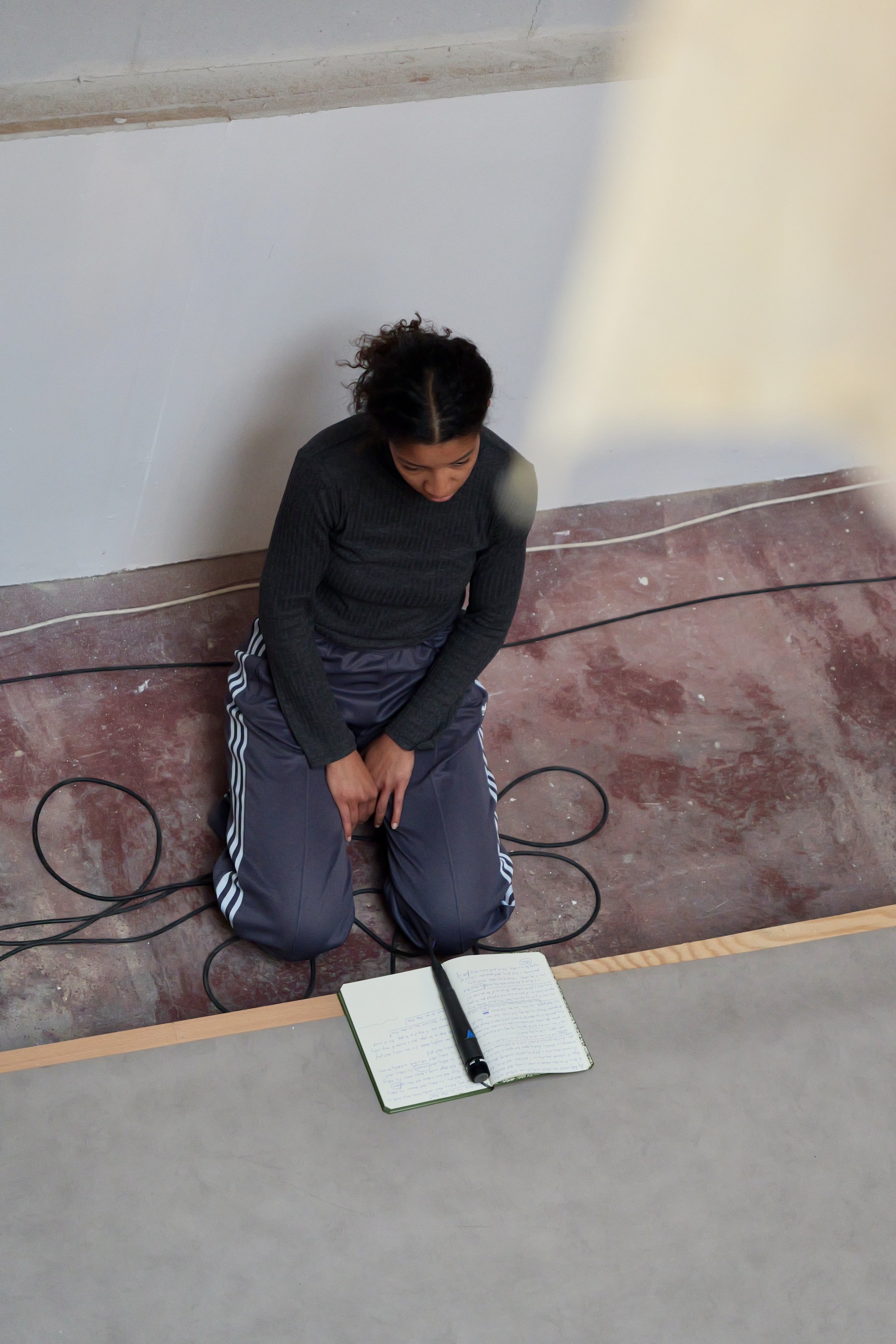
Linora Dinga is a Russo Congolese artist based in Belgium. She was born in Russia, grew up in Congo, Kazakhstan and later in Portugal. She works across performance, text, photography, video and mixed-media installation. Her solo performance Act, Interrupted and the mixed media installation behind the scenes form a body of work exploring her personal journey as an immigrant trapped in a bureaucratic loop.
Currently, Linora is developing new research into the body as a place where life and death cohabit, with the womb at its centre, as an archive of what is passed down through the maternal line, including the griefs we inherit without choosing them. How Much Can We Store There?
She also collaborates as an actress and dancer in other artists’ projects. Recent collaborations include The Maids Materials (theatre performance by Studio Wachowicz/Fret), The Mattress (short film, dir.Georgios Mantzakos), and TimeAfterTime (performance by Izah Hankammer).
ARTIST STATEMENT
I begin in the body. Before language, before form, before the work has a name there is - body. It knows before I know. It carries what cannot yet be said and waits until I am ready to listen.
I make art about what the body knows but language struggles to hold: the bureaucratic systems that act on the body, grief, displacement, the things that cannot survive inside silence. I translate lived experience into form because I believe that what is felt deeply by one body can resonate in another.
I work with movement, text, video, photography, and mixed media installation. The form is never decided in advance. I experiment until the work reveals its shape.
In my installations, I create spaces where visitors can navigate, touch, sit, question. In writing, the body bears witness. In photography, the lens becomes a confession. Whatever the form, I search for the truth the body holds, and try to open something that wasn’t open before.
In my installations, I create spaces where visitors can navigate, touch, sit, question. In writing, the body bears witness. In photography, the lens becomes a confession. Whatever the form, I search for the truth the body holds, and try to open space for what we are taught to hide: the uncomfortable, the taboo, the feelings or conversations we are ashamed to have.